- 首页 > 正文
CAPC 2024丨Al-Aly教授:长新冠多器官功能障碍的关键发现与研究热点
感染医线 发表时间:2024/6/10 10:27:19
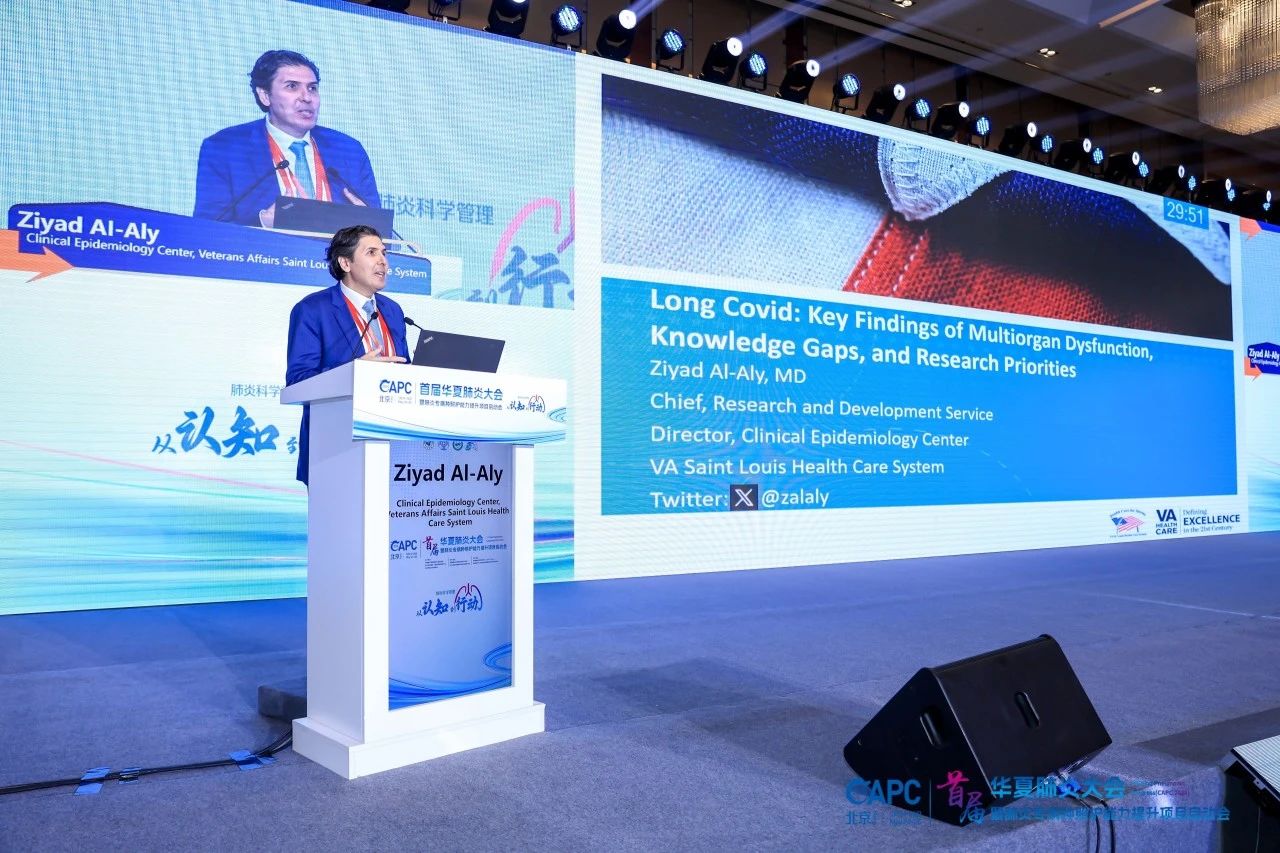
编者按:近日,首届华夏肺炎大会暨肺炎专病能力提升项目启动会(CAPC 2024)在北京顺利举行。本次大会旨在促进呼吸感染相关健康的学术交流,提高我国肺炎“促防诊控治康”水平。美国圣路易斯退伍军人医疗保健系统临床流行病学中心主任Ziyad Al-Aly教授在会上发表了题为“长新冠多器官功能障碍的关键发现与研究热点(Long Covid: key findings of multiorgan dysfunction, knowledge gaps, and research priorities)”的特邀报告。在接受《感染医线》的采访中,Al-Aly教授分享了他的参会感受,并介绍了长新冠的多系统影响、治疗挑战以及未来的研究方向。
01
《感染医线》:能否请您分享一下您对参加本次华夏肺炎大会的感受,以及您对促进国际交流合作的看法?
Al-Aly教授:这确实是一场引人注目的活动。首届华夏肺炎大会于2024年在北京举行,这是一场汇集了来自中国各地和全球多学科专家的学术盛会。能够来到这里,我感到非常高兴和荣幸。大会的成功举办证明了主办方在集结各领域专家方面所做的卓越努力。它代表着中国最优秀、最杰出的人才与国际同行合作,共同推动该领域的发展,促进进步,这不仅将改善中国患者的健康和福祉,也将惠及全球的患者。因此,这是中国科学和世界科学的一项非凡成就。能够来到这里,我深感荣幸。
Infectious Disease Frontier: Could you please share your feelings about attending the 1st China Pneumonia Congress (CAPC 2024) and your views on promoting international exchange and cooperation?
Dr. Ziyad Al-Aly: Well, this is truly a remarkable event. The first China Pneumonia Congress is held in Beijing in 2024, it is an academic event that brings together multidisciplinary experts from all over China and around the globe. I'm really delighted and honored to be here. The success of the congress is a testament to the excellent efforts made by the organizers in uniting experts from various fields. It represents the best and brightest minds in China coming together with international collaborations to advance the field and promote progress that will improve the health and well-being of patients not only in China, but around the world. So this is a marvelous accomplishment for science in China and for science in the world. I am deeply honored to be here.
02
《感染医线》:结合目前的研究证据来看,长新冠主要表现为哪些器官功能障碍?哪些症状可能是在特定时期需要给与特别关注的呢?
Al-Aly教授:长新冠实际上是一种多系统疾病。它几乎可以影响到每一个器官系统。通常情况下,至少在我们所观察到的美国人群中,长新冠的主要特征包括疲乏或劳累后不适、脑雾或认知功能障碍。我们非常担心这些问题,因为这会影响人们的工作能力、照顾家人的能力以及融入社会的能力。上述特征是我们非常担心的关键症状表现。这些症状的恢复轨迹确实各不相同。有些人会随着时间的推移而好转,而不幸的是,也有些人甚至在感染三四年后,仍然存在认知问题和劳累后不适。长新冠具有高度异质性。每位长新冠患者的症状都是独特的,没有两个患者是相同的。长新冠的异质性极强。每个人都有自己独特的长新冠表型。经过四年多的研究,我们已经对长新冠有了更好的了解,期待我们能继续加深理解,并研发出新疗法来帮助这些患者。
Infectious Disease Frontier: Based on current evidence, what are the main organ dysfunctions associated with Long Covid? Which symptoms may require special attention during specific periods?
Dr. Ziyad Al-Aly: Long Covid is really a multi-system disorder. It can affect nearly every organ system. Typically, the main characteristics, at least in the population that we see in the US, include fatigue or post-exertional malaise and brain fog or cognitive dysfunction. We worry about these things a lot because they impact people's ability to work, care for their families, and integrate with society. These are the key features that we really worry about a lot: post-exertional malaise, fatigue, and brain fog or cognitive dysfunction in people with Long Covid. The trajectory of recovery for these things really varies. Some people improve with time, and some people, unfortunately, even three or four years after infection, are still having cognitive problems and post-exertional malaise. Long Covid is highly heterogeneous. I tell people that if you've seen one Long Covid patient, you've seen one Long Covid patient – no two patients are the same. It's very heterogeneous. Every person is their own unique phenotype of Long Covid. More than four years into studying it, we have come to better understand it, and I hope we continue to evolve our understanding and find new treatments for Long Covid to help these patients.
03
《感染医线》:长新冠所涉及的系统和器官非常复杂,目前有一些长新冠的治疗研究报道,但几乎都没有成功。能否分享一下您对长新冠治疗研究的看法?
Al-Aly教授:我们需要做得更多。无论是在美国还是在其他国家,全世界都在为寻找长新冠的治疗方法做着大量的工作,但截至目前,还没有经美国FDA批准的长新冠治疗方法。这种情况确实需要改变。在此呼吁所有科学家和临床医生通力合作,寻找新思路、尝试新疗法、开发并开展相关试验,以检验哪些疗法有效,哪些无效。在医学领域,我们了解治疗方法是否有效的唯一途径就是进行随机对照试验。中国过去在随机对照试验方面做得非常出色。我们需要在长新冠领域做更多具体的工作,以确定有助于患者的治疗方法。
Infectious Disease Frontier: The systems and organs involved in Long Covid are very complex. There have been some reports on Long Covid treatment studies, but almost none have been successful. Could you share your views on Long Covid treatment studies?
Dr. Ziyad Al-Aly: We need to do more. The world, in the US and elsewhere, is doing quite a bit of work to find treatments for Long Covid, but so far, there is no FDA-approved treatment modality for Long Covid. This really needs to change. It's a call for all scientists and clinicians to work cooperatively to find new ideas, try new treatments, and develop and conduct those trials to test which treatments work and which don't. The only way we learn in medicine whether a treatment works is to do randomized controlled trials. China has done an amazing job in the past with randomized controlled trials. We need to do a lot more specifically in the field of Long Covid to identify therapeutics to help patients.
04
《感染医线》:您认为目前我们对长新冠的认知还有哪些不足,未来的研究重点应该放在哪些方面?
Al-Aly教授:我们现在了解到,有包括病毒持续存在、免疫功能障碍和微生物组失衡在内的机制,驱动或导致了长新冠的临床表现。我们需要做更多的基础科学研究和机制研究来了解这一点。我们还需要确定新的生物标志物,无论是蛋白质组学还是其他组学或其他可用工具,以更好地诊断和识别长新冠。我们很多人都感染了SARS-CoV-2,其中大多数人预后较好,但也有一部分人群预后不佳。我们怎样才能识别出这些人群?有哪些生物标志物,甚至是血液或尿液检测,可以帮助我们识别长新冠及其不同的表型?最后,我们需要更多的随机试验来评估治疗长新冠的老药和新型疗法。这是一个需要解决的主要知识缺口。
Infectious Disease Frontier: What are the current gaps in our understanding of Long Covid, and what kind of study issues should we focus on in the future?
Dr. Ziyad Al-Aly: We are now learning that there are mechanisms, including viral persistence, immune dysfunction, and microbiome dysbiosis, that drive or are responsible for the clinical manifestations of Long Covid. We need to do a lot more basic science studies and mechanism studies to understand that. We also need to identify new biomarkers, whether proteomics or other omics, or other tools available to us to better diagnose and identify Long Covid. A lot of us got SARS-CoV-2 infection, and most of us are fine, but some aren't. How can we find these people? What are the biomarkers or even a blood test or urine test that can help us identify Long Covid and its different phenotypes? Lastly, we need more randomized trials testing both repurposed drugs and new or novel therapeutics to treat Long Covid. This is a major knowledge gap that needs to be addressed.
Ziyad Al-Aly, MD
美国圣路易斯退伍军人医疗保健系统临床流行病学中心主任;美国圣路易斯退伍军人医疗保健系统研究与发展服务部主任
Al-Aly教授是一位医生兼科学家;他在美国圣路易斯退伍军人医疗保健系统指导临床流行病学中心的工作,并担任研究与发展服务部主任。他还是圣路易斯华盛顿大学的高级临床流行病学家。他有多个研究方向,包括药物流行病学、环境流行病学、全球健康,以及最近的COVID-19对健康结局的短期和长期影响。
他领导的研究为SARS-CoV-2感染的急性后遗症(也称为长新冠)提供了系统性的特征描述,并随后对SARS-CoV-2感染后心血管疾病、神经系统疾病、糖尿病、血脂异常、肾脏疾病和胃肠道疾病风险的增加进行了描述。他的实验室首次提出关于疫苗对长新冠影响、SARS-CoV-2反复感染的健康后果以及抗病毒药物对SARS-CoV-2感染短期和长期结局影响的证据。
Al-Aly教授在美国国家科学院、国家工程院和医学研究院共识委员会任职,该委员会负责研究COVID-19对健康的长期影响及其对美国社会保障署的影响。
Al-Aly教授入选了《时代周刊》评选的2024年对全球健康影响最大的100人名单。
Al-Aly教授的研究成果发表在包括《自然》、《科学》、《自然医学》、《新英格兰医学杂志》、《英国医学杂志》、《美国医学会杂志》、《柳叶刀》等著名医学期刊上。根据谷歌学术,他的研究成果已被引用超过10万次。《纽约时报》、《华尔街日报》、《华盛顿邮报》、《洛杉矶时报》、美国国家公共广播电台(NPR)、英国广播公司(BBC)、美国有线电视新闻网(CNN)、《卫报》、彭博社、《纽约客》、《大西洋月刊》、《滚石》、《人物》等国际主流媒体经常报道他的研究成果。他的几项关于长新冠的研究引起了极高的公众和媒体参与度,在Altmetric(一家监测公众参与学术研究的公司)跟踪的超过2300万篇研究论文中名列前10。
来源:《感染医线》
声 明
凡署名原创的文章版权属《感染医线》所有,欢迎分享、转载(开白可后台留言)。本文仅供医疗卫生专业人士了解最新医药资讯参考使用,不代表本平台观点。该等信息不能以任何方式取代专业的医疗指导,也不应被视为诊疗建议,如果该信息被用于资讯以外的目的,本站及作者不承担相关责任。
.png)
责任编辑:彭伟彬
相关搜索: 长新冠