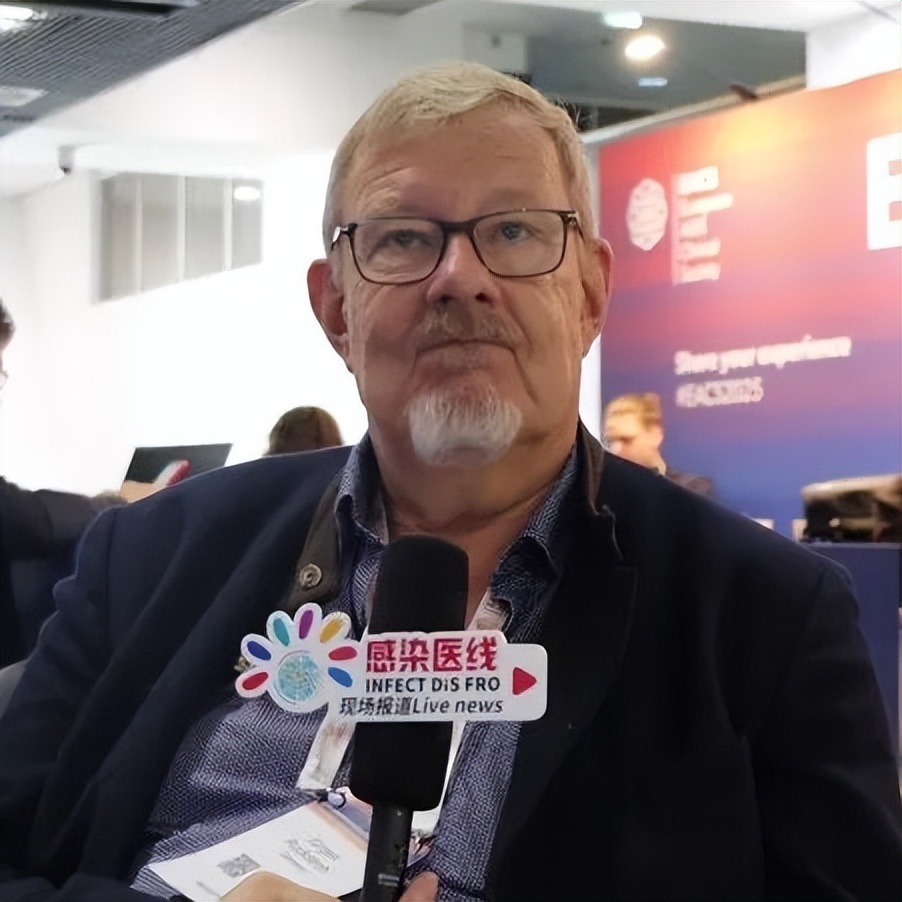
EACS 2025丨Jürgen Rockstroh教授:解读最新版指南,直面HIV诊疗热点争议

陈梓儒(Ziru Chen) 发表时间:2025/11/2 12:50:56

 

编者按:在第20届欧洲艾滋病大会(EACS 2025)期间,《感染医线》特别专访德国波恩大学医院传染病科主任Jürgen Rockstroh教授。Rockstroh教授分享了其团队在HIV感染者癌症筛查领域的最新研究成果,并介绍了最新发布的第13版EACS指南的核心更新与临床意义。此外,他就当前HIV诊疗实践中的热点争议话题以及HIV合并乙肝感染管理等前沿问题,提供了权威而审慎的专家视角。


01

《感染医线》:感谢您接受我们的采访邀请。能否请您向中国读者介绍一下自己?


Jürgen Rockstroh 教授

德国波恩大学医院传染病科主任


大家好,我是Jürgen Rockstroh。目前担任德国波恩大学医院传染病科主任,同时也是欧洲艾滋病临床协会(EACS)指南主席。


Infectious Disease Frontier: Thank you for accepting our invitation. And could you introduce yourself for our Chinese friends, please?


Prof. Jürgen Rockstroh : Hi, my name is Jürgen Rockstroh. I'm head of infectious diseases at the University Hospital in Bonn, Germany, and I'm also the EACS guidelines chair.


02

《感染医线》:能否和我们分享一下,您的团队有哪些研究成果入选了本次EACS大会的口头报告?
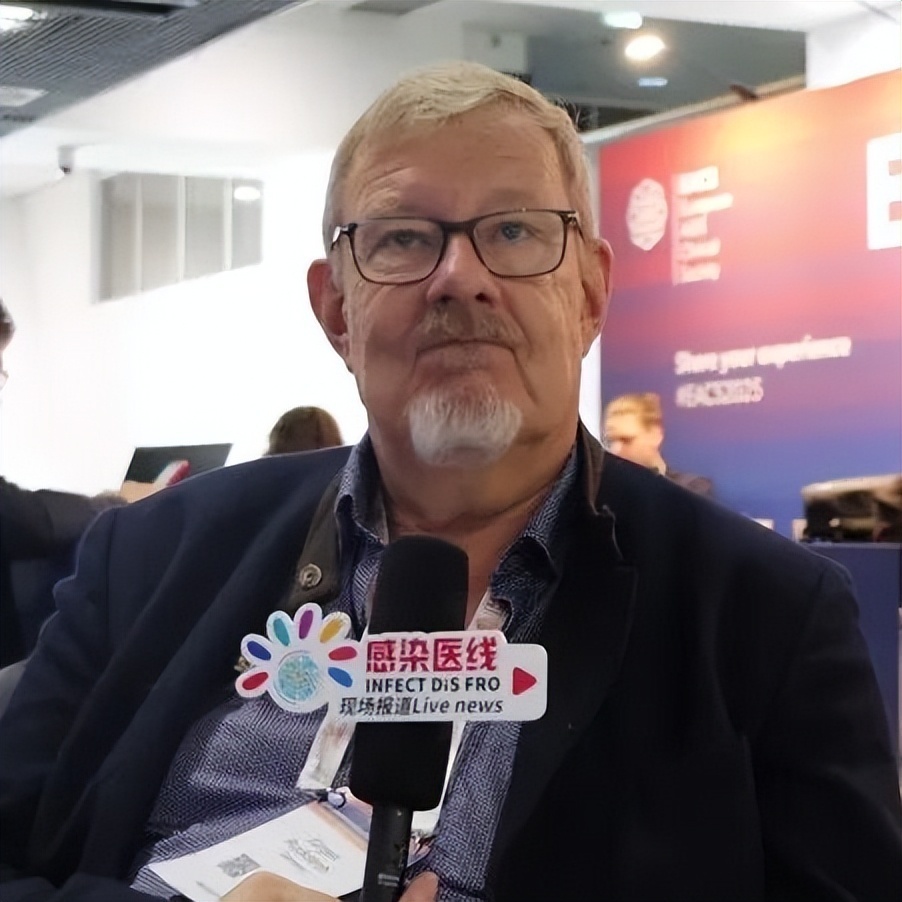
 

Jürgen Rockstroh 教授

德国波恩大学医院传染病科主任


我们团队目前在癌症及癌症筛查领域的研究十分活跃。如今欧洲的HIV感染者中,50岁及以上人群的比例已超过50%,而癌症是该人群最主要的死亡原因。因此,癌症筛查至关重要。


我们在肝炎专题会议上做了一场报告,主题是HIV感染者的肝细胞癌筛查参与情况。目前指南推荐的筛查人群包括:已确诊肝硬化的患者、无论病因如何的晚期肝纤维化患者,以及慢性乙型肝炎患者,尤其存在特定风险因素,且PAGE-B评分超过10分的患者。但我们的研究显示,目前上述人群的筛查参与率仅为60%-65%。显然,“应筛查人群”与“实际筛查人群”之间仍存在差距,希望通过这次报告能推动筛查率的提升。


此外,我们还有一项来自德国多个中心的前列腺癌研究报告。该研究指出,前列腺癌在HIV感染者中较为常见,且发病年龄可能更低。这意味着,HIV感染者的前列腺癌筛查起始年龄或许需要早于普通人群目前的推荐筛查年龄。


Infectious Disease Frontier:Could you share with us which part of your research finding have been selected for the presentation on this EACS conference?


Prof. Jürgen Rockstroh: Our group is currently very active in the area of cancer and cancer screening. People living with HIV now in Europe are on average over 50% or more than 50 years old, and the most common cause of death in people living with HIV is cancer. That's why cancer screening is obviously very important. We had a presentation in the hepatitis session which looked at the uptake of hepatocellular carcinoma screening in people living with HIV, and that obviously means that it's recommended for those individuals who already have cirrhosis, for those with advanced fibrosis regardless of etiology, and then in the presence of chronic hepatitis B, even in the presence of certain risk factors, and particularly when the PAGE-B score is above 10. Now, in that presentation we were able to show that the uptake of screening is only around 60-65%. So there's obviously a gap in who should be screened, so we hope that with this presentation we can improve screening rates.


We also had a presentation on prostate cancer from various German sites, addressing that prostate cancer is very commonly found in people living with HIV, probably at a younger age. So that may also reflect that there is a necessity to initiate prostate cancer screening in people living with HIV at an earlier age than what is currently recommended for the general population.


03

《感染医线》:第13版EACS指南已正式发布。在您看来,新版指南有哪些重要更新?这些更新对HIV预防与治疗实践将产生哪些关键影响?
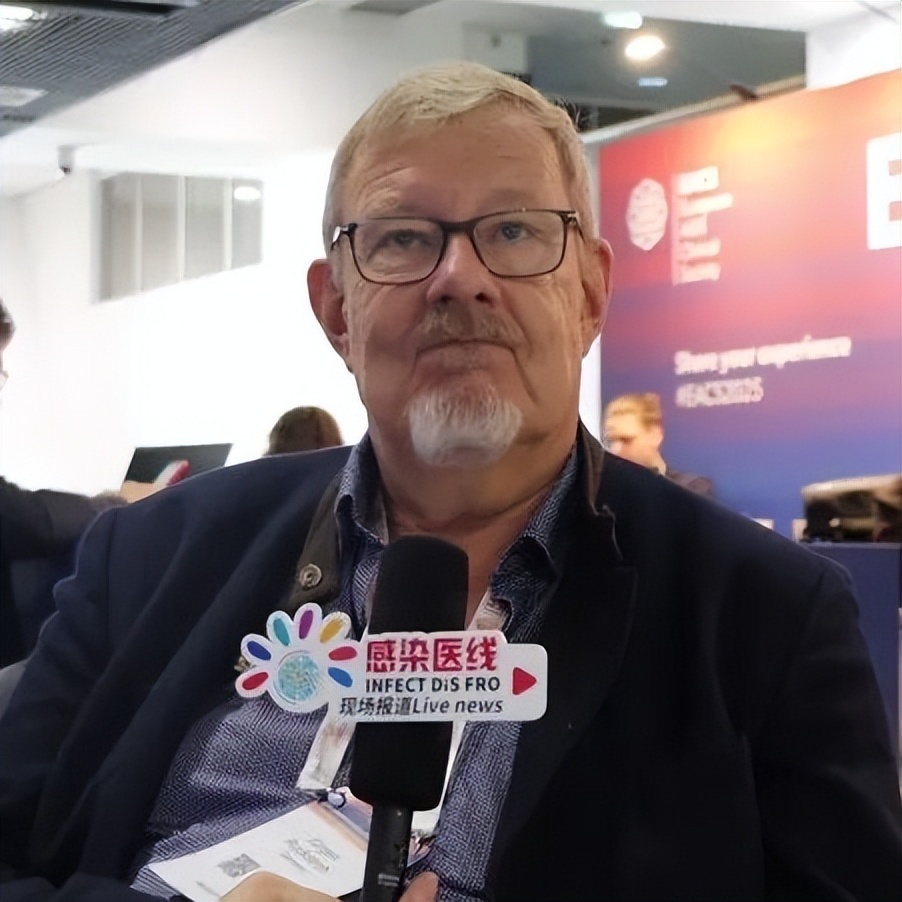
 

Jürgen Rockstroh 教授

德国波恩大学医院传染病科主任


第13版EACS指南是最新版本,于本次会上首次发布。HIV Medicine杂志已发表一篇论文总结了指南的核心内容;同时,大家也可以通过EACS官网或可下载的应用程序免费获取新版指南全文。


新版指南主要分为两大部分:第一部分聚焦HIV治疗、预防及合并感染管理,第二部分则针对各种合并症的管理。


在HIV感染治疗部分,一线治疗方案的推荐方案总体变化不大,但针对特定人群的建议有所调整。例如,在孕妇群体中,比克替拉韦/恩曲他滨/丙酚替诺福韦(B/F/TAF)方案已从“替代方案”调整为“首选方案”,这为HIV感染孕妇提供了更多治疗选择。


此外,在合并感染部分的疫苗接种方面有较多更新。我们认为目前已有能诱导更强免疫应答的新型疫苗,因此推荐更多使用佐剂性乙型肝炎疫苗,这类疫苗能显著提高整体免疫应答率。儿科部分也有多项更新,包括母乳喂养相关建议等。


在合并症管理部分,核心更新集中在癌症筛查策略的调整(明确需筛查的人群范围)和心血管疾病管理方面。后者包括风险评分评估方法、结合REPRIEVE研究结果确定他汀类药物的适用人群,以及新增高血压控制指南,其中高血压收缩压控制阈值已下调至129mmHg,意味着我们推荐更严格的血压管理标准。


我们还邀请了心脏病学、肾脏病学等其他内科学科的专家参与指南制定,以确保我们能提出这些领域的最新建议。这也是新版指南的一大优势:对于部分医疗资源有限、难以接触到专科医生的国家,指南可帮助临床医生处理部分内科相关问题。此外,新版指南还新增了“酒精使用与物质滥用”章节以及“睡眠障碍”章节,其中包含如何通过精准提问评估睡眠障碍的方法。


新版指南涵盖内容广泛,若大家想快速了解重点更新内容,我强烈推荐阅读HIV Medicine杂志上那篇免费获取的总结论文,其中清晰列出了所有关键变化。


Infectious Disease Frontier:The 13th edition of the EACS guideline has been released. In your opinion, what are the significant updates in the new edition, and what important implications for HIV prevention and treatment practice do they bring?


Prof. Jürgen Rockstroh : The EACS guidelines are now updated in version 13. So this is the most recent version, which was released this week on Wednesday for the first time. There is a paper in HIV Medicine which summarizes the main findings, and then there's also on the website of EACS or through the downloadable app free access to the new guideline version.


Now, the guidelines have two sections. One is on HIV treatment and prevention and co-infections, and then the second one is really on the management of all kind of comorbidities. In the treatment of HIV infection section, the recommendations for first-line therapy have not really changed that much, but we do have some changes in particular groups. For example, pregnant women: B/F/TAF has been moved from alternative to preferred regimen, giving a little bit more choices among women who have HIV or live with HIV and are pregnant. And then we had quite a bit of changes in the co-infection panel with regards to vaccination. We believe that there are now better vaccines which lead to better immune responses, so we recommend more use of these new adjuvant-based hepatitis B vaccines which can increase the overall response rates. And we have also various changes in the pediatric section on breastfeeding and many other aspects. So it's quite some changes there.


And then in the comorbidity section, it's really all about changes in the cancer screening, who do we have to screen, and then obviously in the cardiovascular section, it's about how to do risk score assessment, who needs a statin under consideration of the REPRIEVE results, and then also we are implementing new guidance on control for hypertension. So the blood pressure thresholds have dropped to 129 mmHg, so it's a more strict blood pressure control which we now recommend. And we do include people from other disciplines in internal medicine to help us come up with the most up-to-date recommendations in the field of cardiology or nephrology, for example, which I think is really a strength of the guidelines, that we also offer people in various countries where there's limited access to other doctors to manage some of these internal medicine issues as well. We've included a new section on alcohol use and substance use. We included a new section on sleeping disorders, how to best pose questions to assess sleeping disorders.


So I think there's a really a wide range of things, and the easiest way to follow the update of the guidelines, if you just want to see what are the highlights, what is new, then I really recommend you to read the free access paper in HIV medicine from this week which shows the main changes.


04

《感染医线》:结合本次大会后专家对EACS指南的讨论,当前HIV诊疗领域有哪些热点争议话题?未来EACS指南应如何进一步完善?
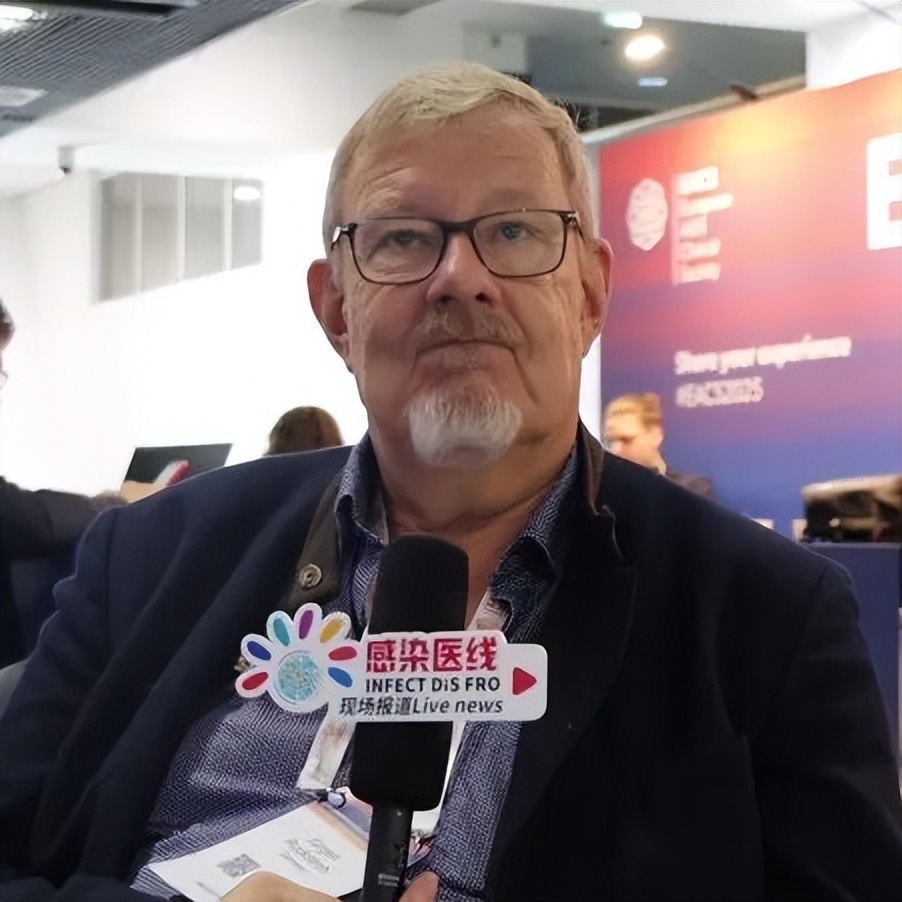
 

Jürgen Rockstroh 教授

德国波恩大学医院传染病科主任


目前确实存在一些尚未达成共识的争议点,主要有以下三个方面:


第一个争议点是,EACS指南是目前唯一在“第二代整合酶抑制剂”之外,将多拉韦林联合两种核苷类逆转录酶抑制剂(NUCs)列为首选方案的指南。其他指南均未做此推荐,因此这一建议受到了部分质疑,核心原因是目前尚无头对头比较研究的数据支持。不过,我们当初将其纳入首选方案,主要是为了给临床提供更多治疗选择,毕竟第二代整合酶抑制剂在欧洲各国的可及性并不一致,需要其他有效方案作为补充。而且,与依非韦伦相比,多拉韦林作为一种改良型非核苷类逆转录酶抑制剂(NNRTI),中枢神经系统毒性更低,药物相互作用也更少。当然,我也认同“缺乏头对头数据”是当前的局限性。


第二个争议点是关于多替拉韦联合拉米夫定(3TC)用于高病毒载量患者。在GEMINI研究中,其中一项子研究显示,基线病毒载量较高的患者使用该方案时,应答率相对较低。因此,这是一个警示。因此,目前指南不推荐病毒载量超过50万copies/mL的患者使用该方案,但这一建议也存在争议。部分真实世界研究显示,高病毒载量患者使用该方案也能获得良好应答。不过,这些真实世界研究的样本量较小,证据强度尚不足以支持我们完全放宽推荐标准。这里我还想补充一点:即使初始选择三药方案,患者治疗3个月后也可调整为两药方案,因此从最终治疗效果来看,初始方案的影响其实有限。但如果追求绝对安全,现有数据仍显示三药方案对高病毒载量、低CD4细胞计数患者的保护作用更强,除非未来有更多针对这类人群的研究数据出炉。


第三个争议点是当前许多患者出现的体重增加问题。新版指南中提到,体重增加可能与丙酚替诺福韦(TAF)或第二代整合酶抑制剂相关,但这一关联也存在争议,并非所有研究都支持这一结论。例如,近期在多个会议上公布的POZitive研究显示,含TAF的方案与体重增加存在相关性,这为指南的观点提供了部分证据,但争议仍未平息。需要注意的是,指南的推荐最终遵循多数原则:即使部分专家持不同意见,只要多数专家支持保留“体重增加关联”的表述,该内容就会被纳入指南。这一点大家在解读指南时可以留意。


Infectious Disease Frontier:Based on the discussion of the EACS guideline by experts after this conference, what are the hotly debated topics in the field of HIV diagnosis and treatment? How should the EACS guideline be future improved?


Prof. Jürgen Rockstroh : I think there are some ongoing controversies. One is that the EACS Guidelines is the only guideline which, beyond second-generation integrase inhibitors, also recommends as a preferred regimen doravirine with two NUCs. That is not recommended by any other guideline, and there is some criticism because we do not have the results of a head-to-head comparison yet. So that is a limitation, but particularly when this was established, there was a feeling to give people sort of an armamentarium to choose from, and that has a lot to do with that the second-generation integrase inhibitors did not become available in all European countries at the same time. So there was also a need for other agents, and doravirine is an improved NNRTI in comparison to efavirenz with less CNS toxicity, fewer drug interactions. But I would agree that there is some controversy because the head-to-head comparison results are still not available.


One other issue is the use of dolutegravir 3TC in people with high viral loads. If you remember, in one of the GEMINI studies, there was a lower response rate in people with a high baseline viral load. And so that is a caveat. We do not recommend dolutegravir 3TC in patients with above 500,000 copies/mL. That has also been controversially discussed because we did see some real-world studies suggesting that patients with high viral loads do respond also well, but again, these are small numbers and we feel that the evidence is not strong enough yet to give a complete go for that particular high viral load. I would also highlight that if you start someone on a three-drug regimen, you can always simplify that person to a two-drug regimen after three months. So I think in the end, it really doesn't matter, but if you want to be on the very safe side, I guess there are some data pointing to an even higher protection with three-drug regimens unless we see more data from patients in those populations with high viral load and low CD4 count.


And then there's one ongoing issue of what causes the weight gain in many patients which we're seeing right now. And there are some comments in the guidelines sort of associating weight gain potentially with TAF or second-generation integrase inhibitors. That has been also regarded a little bit controversial because not all studies have shown that association. But for example, in the POZitive study, which was presented at various meetings recently, there was a difference between the TAF containing regimen, so there is at least some evidence, but that remains controversial also in the guidelines. But remember, the guidelines are going to go with what the majority votes for. So it could be that there is a group having a different opinion, but if the majority is, for example, in favor of leaving the weight association, then that's what happens. So that is something to keep in mind.


05

《感染医线》:HIV合并感染一直是您的研究重点之一。当前EACS指南对“具有抗乙肝病毒(HBV)活性但基因屏障较低或无基因屏障的抗逆转录病毒治疗(ART)方案”提出了新建议,本次大会也有研究探讨“长效ART方案相关的乙肝病毒再激活”问题。您如何看待这些话题?

 

Jürgen Rockstroh 教授

德国波恩大学医院传染病科主任


这确实是一个关注度日益提升的领域,因为在研发管线中的新型抗病毒药物,我们目前看到的大多是双药方案,这些方案不含富马酸替诺福韦二吡呋酯(TDF)或TAF,而这两种药物是目前抗HBV活性最强的药物,这意味着许多患者可能会失去对HBV的有效抑制。


因此,指南传递的核心信息非常明确:若患者乙肝表面抗原(HBsAg)阳性持续超过6个月,即确诊慢性乙肝,我们强烈建议其继续使用含TDF或TAF的ART方案,因为这两种药物是抑制HBV复制的关键。


若患者乙肝血清学检查完全阴性,即乙肝表面抗体(抗-HBs)和乙肝核心抗体(抗-HBc)均为阴性,则强烈建议接种新型乙肝疫苗。因为在多项临床研究,如比克替拉韦、艾维雷韦、伊斯拉曲韦/多拉韦林、伊斯拉曲韦/艾维雷韦相关研究中,均观察到未接种疫苗且血清学阴性的患者出现急性乙肝感染病例。因此疫苗接种至关重要,这一点在新版指南中也得到了重点强调。


本次大会还有多个报告聚焦第三类人群:抗-HBc阳性、抗-HBs阳性或阴性的患者,即“HBV感染已缓解”的人群。其中部分免疫水平较好的患者抗-HBs阳性,至少25%的患者仅抗-HBc阳性。大家关心的问题是:若将这类患者的治疗方案切换为不含TDF/TAF的长效方案,如卡博特韦/利匹韦林,是否存在HBV再激活风险?


我们在本次大会上做了两场口头报告,结果显示,在已切换为长效方案的这类患者中,尚无一人出现具有临床意义的HBV再激活,这是一个积极信号。但需要注意的是,通过高灵敏度PCR检测,可在部分患者体内发现极低水平的病毒复制迹象。目前的关键问题是:这种极低水平的病毒复制是否有临床意义?只要患者肝功能酶学指标正常、乙肝表面抗原(HBsAg)未复阳,我认为暂时无需过度担忧。但这也引发了另一个疑问:对于抗-HBc阳性(无论抗-HBs是否阳性)的患者,是否需要更频繁的监测?目前指南推荐这类患者每年进行一次乙肝血清学检查,尚无最终定论,但随着更多数据的积累,我们会进一步优化建议。截至目前,尚无研究报道这类患者出现严重肝功能失代偿或肝功能酶学指标显著升高的案例,因此目前来看是安全的。但仍需牢记,对乙肝血清学阴性的患者进行疫苗接种,是预防HBV感染的关键措施。


Infectious Disease Frontier:HIV co-infection has always been one of your research interests. The current EACS guidelines have issued new recommendations on ART treatment regimens containing anti-HBV activity with no or low genetic barrier. There were also studies presented at this conference regarding HBV reactivation with long-acting ART regimens. Could you share your view on this topic?


Prof. Jürgen Rockstroh : I think this is really a growing area of concern because in the pipeline of new antiviral drugs, most of the drug combinations we currently see are two-drug regimens which do not contain TDF or TAF, which means that our most active drug against hepatitis B is no longer being used in many individuals. So I think the clear message is from the guidelines: if you are HBs antigen positive for more than six months, which defines chronic hepatitis B, we highly recommend to continue a TAF or TDF containing regimen because you will need that to suppress HBV replication.


Now, if you have a completely negative hepatitis B serology, so anti-HBs and anti-HBc are negative, then we highly recommend vaccination with the new vaccines, because in all of the trials we have seen—bictegravir, elvitegravir, islatravir/doravirine, or islatravir/elvitegravir—we have seen cases of acute hepatitis B in individuals who were not vaccinated and had a negative serology. So doing vaccination is very important, and this is reiterated now very strongly.


And then you have the individuals—and that is a focus of this conference with many presentations—on individuals who are anti-HBc positive and then do or not do have anti-HBs antibodies. So they have a resolved hepatitis B infection. Some with better immune protection levels have anti-HBs, but many, at least 25%, don't. They have only anti-HBc. And so the question becomes, if I switch someone to, for example, a long-acting regimen with cabotegravir/rilpivirine which no longer contains TDF and TAF, is there a risk of reactivation?


And we have two oral presentations at this conference suggesting that in these people who switched, no patient developed a clinically significant hepatitis B reactivation. So that's good news, but in many of these individuals, you can see on a very sensitive PCR level signs of ongoing replicative capacity. So you can have very low viral loads, and the question is, what does that mean? As long as the liver enzymes stay normal and HBs antigen doesn't come back, I think it's not necessarily a problem. But it does ask the question, shouldn't we monitor patients who are anti-HBc positive, with or without anti-HBs antibodies, more frequently? And I think the guidelines are currently recommending an annual check of hepatitis B serology in these patients. I think the final judgment is not out there, but as we're gathering more and more data, so far no one has really described a severe case of hepatic decompensation or liver enzyme increase. So I think we're safe for now, but it is important to remember, and in particular to vaccinate people who are negative in their hepatitis B serology.


来源:《感染医线》


声 明

凡署名原创的文章版权属《感染医线》所有,欢迎分享、转载(开白可后台留言)。本文仅供医疗卫生专业人士了解最新医药资讯参考使用,不代表本平台观点。该等信息不能以任何方式取代专业的医疗指导,也不应被视为诊疗建议,如果该信息被用于资讯以外的目的,本站及作者不承担相关责任。

发表评论

提交评论
返回
顶部